Blood donation tools
When can I donate blood again?
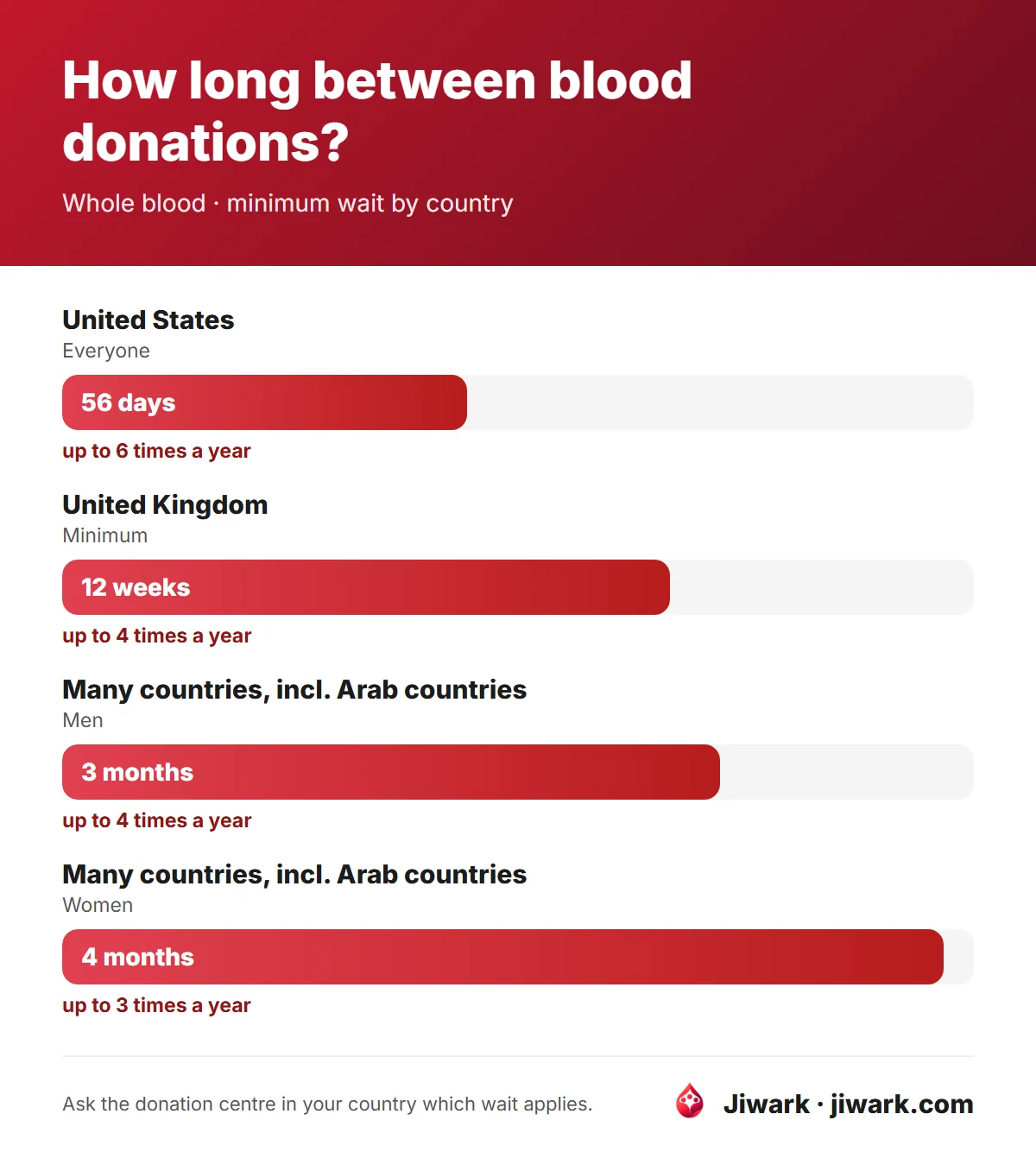
Your body needs time to make up for what it lost when you donated blood. The shortest accepted wait is 56 days (in the US); many countries, including several Arab countries, ask for 3 months for men and 4 for women. Enter your last donation date and we will work out all three dates.
This tool gives general guidance based on published rules, which differ by country and change over time. It does not replace a medical assessment. The doctor at the donation centre always makes the final decision. In an emergency, call your local emergency number.
How many days between donations?
A whole blood donation (about 450 ml) takes red blood cells and part of your iron store. The body replaces the fluid within hours, but rebuilding red cells and iron takes weeks. That is why every country sets a minimum gap between whole blood donations: 56 days (8 weeks) in the US, at least 12 weeks in the UK, and 3 months for men and 4 for women in many countries, including several Arab countries. This tool works out the 56-day date because it is the shortest, and also shows the 3- and 4-month dates.
How often can I donate in a year?
Between 3 and 6 times, depending on the gap your country uses: up to 6 with a 56-day gap, 4 with a 3-month gap, 3 with a 4-month gap. Rest and good nutrition matter more than the number.
How do I make up for what I lost?
Drink more fluids than usual on the first day, eat iron-rich foods such as meat, liver, lentils and spinach with a source of vitamin C like lemon, and avoid hard exercise for the rest of the day. If you feel dizzy, lie down and raise your feet a little.
What about plasma and platelets?
Each type has its own interval. According to the American Red Cross: platelets every 7 days (up to 24 times a year), plasma every 28 days (up to 13 times) and double red cells every 112 days (up to 3 times). Choose the type of donation in the calculator above, and ask the centre about the rules in your country.
Frequently asked questions
How often can you donate blood?
It depends on the country: every 56 days in the US, at least every 12 weeks in the UK, and every 3 months for men and 4 for women in many other countries, including several Arab countries. Follow your national blood service.
What if I donate before the wait is over?
The centre will most likely refuse, because your hemoglobin and iron have not recovered, and no blood is taken if the hemoglobin is low.
Can I give plasma or platelets before the wait is over?
Platelet and plasma donations have their own, shorter intervals: choose the type of donation in the calculator to see your date. The rules for switching from one type to another differ between centres, so ask the donation centre about your case.
Is the day I donated counted?
The count starts on the day you donated. The first possible date is the day the wait is complete.
How do I remember the date?
Add it to your calendar with the “Add to Google Calendar” button above, or sign up at Jiwark and we will remind you automatically.
Sources
This tool is based on the published guidelines below. Some rules differ between countries, and the donation centre in your country has the final word.
- Frequency of donation (whole blood) UK Blood Transfusion Services (JPAC)
- Types of blood donations American Red Cross
- Blood donor selection: guidelines on assessing donor suitability for blood donation World Health Organization
Content and links last reviewed: 17 October 2026. How we write the tools
More tools that may help
-
Can I donate blood today?
Answer a few short questions and see whether you can donate now, and if not, why and when.
-
Child’s blood type predictor
Pick both parents’ blood types to see which types the child can and cannot have.
-
Blood type compatibility chart
Pick a blood type to see who it can help and who it can receive from. Share the link with a type picked to show someone their matches.
-
Blood donation guides
Short answers to the most common questions about giving blood.
Sign up as a donor and be ready when someone needs you
Jiwark reminds you of your next donation date and alerts you only when someone in your city needs your blood type. Signing up is free.